
Study
Scribbr: The Ultimate Academic Writing Assistant for Students and Researchers

Published
2 months agoon

Table of Contents
ToggleIn the demanding world of academia, where every word counts and the pressure to produce flawless work is immense, students and researchers often find themselves grappling with complex writing challenges. The journey from a rough draft to a polished, submission-ready paper is fraught with obstacles, from structuring arguments and mastering citation styles to ensuring originality and avoiding grammatical errors. This is where Scribbr emerges as a powerful ally, transforming the daunting task of academic writing into a manageable and even rewarding experience. Scribbr is an innovative platform that combines advanced AI technology with professional human expertise to offer a comprehensive suite of services designed to elevate the quality of academic work. By providing tools such as a sophisticated plagiarism checker, an accurate citation generator, an AI-powered proofreader, and access to a vast knowledge base, Scribbr has established itself as an indispensable resource for millions of students and educators worldwide. This article explores the multifaceted capabilities of Scribbr, how it addresses the core needs of the academic community, and why it stands out as a leading academic writing assistant.
What is Scribbr and Why Has It Become an Academic Essential?
At its core, Scribbr is an academic writing assistant that bridges the gap between a student’s efforts and the high standards required for academic success. Founded in 2012, the company has grown significantly, and its acquisition by Course Hero in 2022 only solidified its position as a key player in the educational technology sector. What sets Scribbr apart is its hybrid model, which seamlessly integrates powerful artificial intelligence tools with the option for human proofreading and editing by real experts. This dual approach ensures that users can choose the level of support they need, whether it’s a quick, automated grammar check or a comprehensive review of their entire paper by a seasoned professional. Scribbr serves a broad audience, from high school students writing their first essays to PhD candidates finalizing their dissertations, offering a range of services tailored to different academic stages. Its reputation for reliability, transparency, and accuracy, backed by partnerships with trusted names like Turnitin for plagiarism detection, has made it a go-to resource in academic circles.
Unveiling the Core Tools: The Scribbr Suite
Scribbr offers a robust collection of tools designed to tackle every stage of the academic writing process. These tools are not just standalone utilities but are part of an integrated ecosystem that helps users produce high-quality, original, and well-cited academic papers.
AI Proofreader & Grammar Checker: The AI Proofreader is a sophisticated tool that meticulously scans documents for grammar, spelling, punctuation, and other common writing mistakes in academic texts. Trained on thousands of academic documents, it boasts an accuracy rate close to 95% and provides corrections directly in a .docx file using Word’s Track Changes feature, making the revision process highly efficient. For users seeking a quick check of shorter text fragments, the free Grammar Checker serves as an accessible entry point, identifying potential issues and their frequency. The premium version of the AI Proofreader offers unlimited checks for 30 days for a one-time fee, correcting all identified issues directly in the document.
Plagiarism Checker: Ensuring originality is paramount in academia, and Scribbr’s Plagiarism Checker is a critical tool in this regard. Powered by Turnitin, this feature compares submitted text against an extensive database of web pages, academic journals, and previously published papers to identify potential instances of unoriginal content. Unlike some other tools, Scribbr’s plagiarism check is designed for students and academics, providing detailed and reliable reports that highlight matched sources. The pricing is based on document length, starting at a reasonable one-time fee, making it an affordable solution for students.
Citation Generator & Checker: Correct citations are the backbone of academic integrity, but they can be notoriously difficult to get right. Scribbr’s Citation Generator simplifies this process, allowing users to create perfect citations in a variety of popular styles, including APA, MLA, Chicago, Harvard, and more, in just a few clicks. Furthermore, the Citation Checker tool goes a step further by reviewing existing citations for formatting errors, catching mistakes that could lead to lost marks. This is a lifesaver for students finalizing their reference lists, with both AI and human-editor options available to ensure flawless citations.
Summarizer, Paraphrasing Tool & AI Humanizer: These tools support the research and drafting phases of writing. The Summarizer condenses long, complex articles and papers into their key points, significantly reducing reading time and aiding in literature reviews. The Paraphrasing Tool helps users rephrase passages while preserving their original meaning, which is invaluable for integrating source material seamlessly into a paper. Perhaps most relevant in the current academic climate, the AI Humanizer rewrites AI-generated text to read as genuinely human-written, providing a layer of protection against AI content detectors and ensuring a more authentic voice.
Scribbr and the Modern Academic Landscape: Addressing Challenges
The modern academic environment is increasingly complex, with new challenges emerging around technology, particularly AI. Scribbr is uniquely positioned to help users navigate this landscape. For students, tools like the AI Detector provide an essential self-check, enabling them to identify and refine any text that might have been AI-generated or refined before submission. This proactive approach helps students maintain their academic integrity and avoid the severe consequences associated with submitting AI-generated content as their own work. For educators, Scribbr’s AI Detector serves as a valuable resource for verifying student submissions, offering a detailed, passage-level analysis that provides more nuance than a simple overall score. Moreover, the platform’s extensive knowledge base of over 300 articles on topics ranging from academic writing and plagiarism to citing sources empowers students to develop their own skills. This educational component aligns with Scribbr’s mission to not just provide a quick fix, but to genuinely support learning and long-term academic development.
Conclusion: Is Scribbr the Right Choice for You?
Scribbr is more than just a collection of writing tools; it is a comprehensive support system designed to empower students and researchers to produce their best work. By combining cutting-edge AI with the option for expert human review, it offers a flexible, reliable, and effective solution to some of the most persistent challenges in academic writing. Whether you need to ensure your paper is grammatically flawless, check for accidental plagiarism, generate perfect citations, or verify the authenticity of your writing, Scribbr provides a suite of tools that are both user-friendly and academically rigorous. Its commitment to accuracy, as seen in its partnership with Turnitin and its high-performing AI Proofreader, sets it apart from many competitors. Furthermore, its responsiveness to modern issues like AI-detection demonstrates its dedication to evolving alongside the needs of the academic community. Ultimately, Scribbr serves as a valuable investment in academic success, offering peace of mind and a clear pathway to more polished, credible, and effective academic work.
Frequently Asked Questions (FAQ) about Scribbr
1. What is the difference between Scribbr’s free and premium services?
Scribbr offers a range of services, some of which are free and others premium. The free services include the basic Grammar Checker, which identifies potential errors and their frequency, and the Citation Generator, which can produce citations in various formats. Premium services, typically available for a one-time fee, include the AI Proofreader, which corrects all grammatical and stylistic errors directly in your document, and the Plagiarism Checker, which provides a comprehensive report on your paper’s originality. Additionally, Scribbr provides human Proofreading & Editing services, where an expert reviews your work, offering a premium layer of detail and feedback.
2. How accurate is Scribbr’s plagiarism checker, and how does it work?
Scribbr’s Plagiarism Checker is renowned for its high accuracy, as it is powered by Turnitin, the same software used by most universities and academic institutions worldwide. The checker compares your document against a vast, continually updated database of web pages, academic publications, and other student papers to detect similarities. It then generates a detailed report highlighting any matched text and its source, allowing you to review and properly cite any unoriginal content. This makes it a highly reliable tool for ensuring your work is original.
3. Can Scribbr help me if I’m not a native English speaker?
Absolutely. Scribbr is an excellent resource for non-native English speakers. Its AI Proofreader and Grammar Checker are designed to identify and correct grammatical errors, awkward phrasing, and punctuation issues, improving the overall fluency and clarity of your writing to an academic standard. Furthermore, the platform offers services from editors who are familiar with the challenges faced by non-native speakers. This combination of AI support and human expertise makes it an invaluable tool for polishing academic work in a second language.
4. Is my document safe and secure when uploaded to Scribbr?
Security is a top priority for Scribbr. Uploaded documents are handled with strict confidentiality. For the AI Proofreader, the original file is deleted immediately after the corrected version is generated. The corrected version is stored securely on their servers and is deleted after 12 months. Users also have the option to manually delete their files at any time. Scribbr’s secure server protocols ensure that your work remains private and protected.
5. What are the main tools Scribbr offers for academic writing?
Scribbr offers a comprehensive suite of tools designed for all stages of academic writing. Key tools include the AI Proofreader/Grammar Checker for error detection and correction, the Plagiarism Checker for ensuring originality, the Citation Generator and Checker for managing references, and the Summarizer for condensing research materials. Additionally, it features a Paraphrasing Tool to help rewrite text and an AI Detector to identify AI-generated content, addressing modern academic challenges. All these tools are backed by a vast Knowledge Base of helpful articles and guides.
You may like
Study
Mastering Preterite Conjugations: The Ultimate Guide to Spanish Past Tense
Published
2 months agoon
July 28, 2026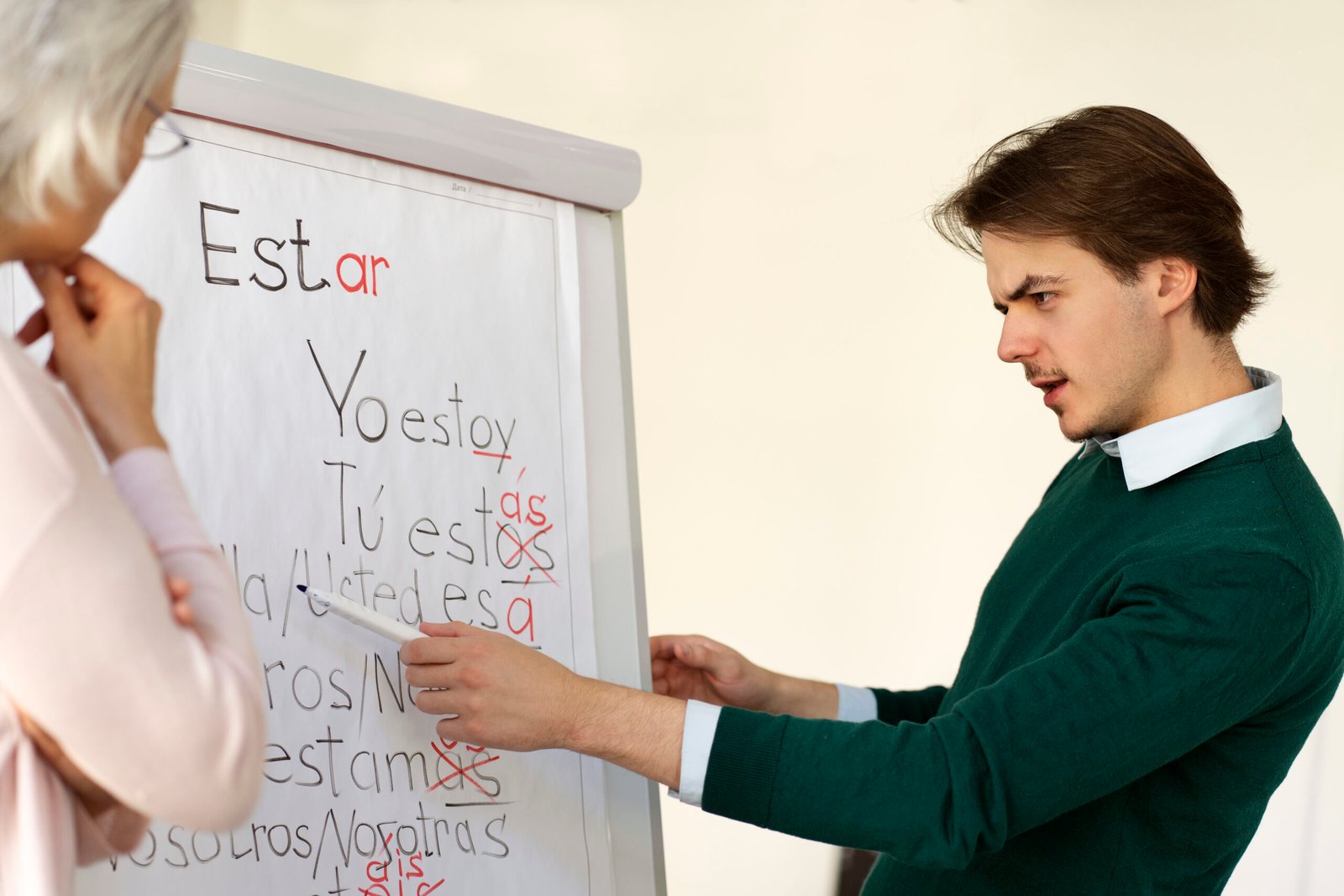
Table of Contents
ToggleThe preterite tense, known in Spanish as el pretérito or el pretérito perfecto simple, stands as one of the most essential pillars of Spanish grammar. For English speakers learning Spanish, mastering preterite conjugations represents a critical milestone on the path to fluency, as this tense allows you to narrate completed actions in the past with precision and clarity. Unlike English, which primarily relies on a single simple past tense, Spanish offers distinct past tenses that convey different nuances about how an action occurred. The preterite specifically describes actions that were completed at a definite point in the past, with a clear beginning and end . Whether you are recounting what you did yesterday, telling a story about a childhood memory, or describing a sequence of events that unfolded last week, the preterite tense is your go-to tool for expressing these completed actions. In this comprehensive guide, we will explore everything you need to know about preterite conjugations, from the regular patterns that follow predictable rules to the irregular verbs that require dedicated memorization, along with the specific situations where this tense should be used instead of its counterpart, the imperfect.
Understanding Regular Preterite Conjugations
The foundation of preterite conjugations lies in understanding the regular patterns that apply to the three main verb categories in Spanish: -ar, -er, and -ir verbs. For regular -ar verbs, such as hablar (to speak), you remove the infinitive ending and add the following preterite endings: -é, -aste, -ó, -amos, -asteis, -aron. For example, the conjugation of hablar in the preterite becomes hablé, hablaste, habló, hablamos, hablasteis, hablaron . For regular -er and -ir verbs, such as comer (to eat) and vivir (to live), the endings are identical: -í, -iste, -ió, -imos, -isteis, -ieron. Thus, comer becomes comí, comiste, comió, comimos, comisteis, comieron, and vivir becomes viví, viviste, vivió, vivimos, vivisteis, vivieron . A key detail to remember is that the nosotros form for -ar and -ir verbs is identical in both the preterite and present tenses; context clues such as ayer (yesterday) or siempre (always) help distinguish which tense is being used . Additionally, the first and third person singular forms of all regular preterite conjugations carry an accent mark on the final vowel, which is crucial for correct spelling and pronunciation .
The Importance of Accent Marks in Preterite Conjugations
In the Spanish preterite tense, accent marks play a vital role that extends far beyond mere spelling conventions, as they serve to distinguish between different tenses and subjects. The first person singular (yo) and third person singular (él, ella, usted) forms for regular preterite conjugations all require a written accent on the final vowel, and omitting these accent marks can fundamentally change the meaning of a sentence . Consider the difference between canté (I sang) and cante (I sing/that I sing), or between mandó (he/she sent) and mando (I send). Without the accent mark, the verb shifts from a completed past action to a present tense conjugation, completely altering the temporal framework of your statement . This distinction becomes particularly important because subject pronouns are frequently omitted in Spanish, making the verb form itself the primary indicator of who performed the action and when it occurred. For instance, cantó with an accent clearly indicates that someone else sang in the past, while canto without the accent marks the speaker performing the action in the present . Developing the habit of including these accent marks when writing in the preterite tense will significantly improve your accuracy and prevent confusion in your Spanish communication.
Mastering Irregular Preterite Conjugations
While regular preterite conjugations follow predictable patterns, a significant number of common Spanish verbs are irregular in the preterite tense and require special attention. Fortunately, these irregular verbs often follow recognizable patterns that can be grouped together for more efficient learning. One of the most interesting phenomena in Spanish preterite conjugations is that the verbs ser (to be) and ir (to go) share identical forms in this tense: fui, fuiste, fue, fuimos, fuisteis, fueron . The context of the sentence makes clear which verb is being used, with fui al cine clearly indicating “I went to the cinema” while fui estudiante means “I was a student.” Another group of irregular verbs includes estar, tener, andar, poder, poner, saber, and hacer, which adopt new stems in the preterite and take a specific set of endings: -e, -iste, -o, -imos, -isteis, -ieron . For example, estar becomes estuve, estuviste, estuvo, estuvimos, estuvisteis, estuvieron, while tener becomes tuve, tuviste, tuvo, tuvimos, tuvisteis, tuvieron. Hacer follows a similar pattern but features a spelling change in the third person singular, where it becomes hizo instead of hico to preserve the soft sound . Verbs like decir and traer change their third person plural ending from -ieron to -eron, resulting in dijeron and trajeron rather than dijieron and trajieron .
Stem-Changing Verbs in the Preterite
For -ir verbs that undergo stem changes in the present tense, the preterite conjugations exhibit changes only in the third person singular and plural forms. Verbs such as pedir (to ask for/to order), dormir (to sleep), and preferir (to prefer) follow this pattern, where the stem vowel changes from *e* to *i* or from *o* to *u* exclusively in the él/ella/usted and ellos/ellas/ustedes forms . For instance, pedir conjugates as pedí, pediste, pidió, pedimos, pedisteis, pidieron, while dormir becomes dormí, dormiste, durmió, dormimos, dormisteis, durmieron . This particular irregularity is distinctive to -ir verbs and does not occur with -ar or -er verbs, making it an important pattern to recognize when dealing with these verb types. The third-person changes, pidió and durmió, carry an accent mark, while the plural forms pidieron and durmieron do not, reflecting the shift in stress that accompanies these stem changes . Understanding this pattern will help you correctly conjugate a wide range of common verbs that you encounter in everyday Spanish conversation and writing.
Verbs with Spelling Changes: -CAR, -GAR, -ZAR
A specific category of regular verbs undergoes spelling changes in the preterite tense, but only in the first person singular (yo) form, to maintain consistent pronunciation across all conjugations. Verbs ending in -car, -gar, and -zar are affected by this rule, with the change occurring when the infinitive ending is removed and the preterite yo ending *-é* is added . For -car verbs such as buscar (to look for), the *c* changes to qu before the *-é* ending, yielding busqué for the yo form, while the other forms remain regular: buscaste, buscó, buscamos, buscasteis, buscaron . For -gar verbs like llegar (to arrive), the *g* changes to gu before the *-é* ending, producing llegué in the first person singular. For -zar verbs such as empezar (to start), the *z* changes to *c* before the *-é* ending, giving empecé . A helpful memory aid is to remember that “CAR-GAR-ZAR verbs get QUÉ-GUÉ-CÉ’s” in the yo form . These spelling changes are purely phonetic and serve to preserve the same sound across all conjugations, so once you become accustomed to these patterns, they will become second nature.
When to Use the Preterite Tense
Understanding when to use the preterite tense is just as important as knowing how to conjugate it correctly, as Spanish offers another past tense, the imperfect, for different types of past actions. The preterite is specifically used to describe actions that were completed in the past at a definite point in time, with a clear beginning and end . This includes actions that occurred at specific times or dates, such as Ayer compré un coche nuevo (Yesterday I bought a new car) or Mi hermana nació en abril (My sister was born in April) . The preterite is also used when narrating a series of completed actions in sequence, as in Me levanté, me vestí y salí para la fiesta (I got up, got dressed, and left for the party) . Additionally, the preterite is employed to describe the beginning or end of an action, using verbs such as empezar, comenzar, terminar, and acabar, as in La fiesta terminó cuando él se fue (The party ended when he left) . When an ongoing action in the past is interrupted by another event, the interrupting action is expressed in the preterite, while the ongoing action is expressed in the imperfect, as in Estaba durmiendo cuando mi perro ladró (I was sleeping when my dog barked) . Finally, the preterite is used for actions that were performed a specific number of times, such as Comí tres churros ayer (I ate three churros yesterday) .
The Preterite vs. The Imperfect
One of the most challenging aspects of learning Spanish past tenses is distinguishing between the preterite and the imperfect, as both refer to past actions but serve different narrative functions. While the preterite focuses on completed actions with a clear endpoint, the imperfect is used to describe ongoing, habitual, or repeated actions in the past without a specified beginning or end . The imperfect is also used to set the scene, provide background information, describe physical or emotional states, and express time, age, or weather in the past . For instance, Iba a la escuela todos los días (I used to go to school every day) uses the imperfect because it describes a habitual action, while Fui a la escuela ayer (I went to school yesterday) uses the preterite because it describes a specific completed event . Similarly, La casa era grande (The house was big) uses the imperfect for description, whereas La casa fue construida en 1990 (The house was built in 1990) uses the preterite for a completed action . The distinction can sometimes be subtle, and certain expressions can help trigger the appropriate tense; for example, time expressions like ayer, la semana pasada, and el año pasado typically signal the preterite, while phrases like siempre, todos los días, and cada año often indicate the imperfect . Understanding this distinction will greatly enhance your ability to express yourself clearly and accurately in Spanish.
Common Time Expressions with the Preterite
Certain time expressions frequently accompany the preterite tense, serving as helpful indicators that a completed past action is being described. These expressions include ayer (yesterday), anteayer (the day before yesterday), anoche (last night), la semana pasada (last week), el mes pasado (last month), and el año pasado (last year) . More specific time references such as el otro día (the other day), entonces (then), en aquel momento (at that moment), and desde el primer momento (from the first moment) also signal the use of the preterite . Additionally, specific dates, times, and periods of duration, such as el tres de agosto (on August third), a las diez (at ten o’clock), and por tres meses (for three months), are typically accompanied by the preterite when referring to completed actions . These time expressions provide useful context that helps both the speaker and the listener understand the temporal framework of the action being described, making them valuable tools for effective communication in Spanish.
Practical Examples of Preterite Conjugations in Context
To truly master preterite conjugations, it is essential to see them used in practical, real-world contexts. Consider a narrative about a recent weekend: El sábado, me levanté a las ocho, desayuné un café con tostadas, y salí para el parque con mis amigos. Caminamos por el sendero, tomamos fotos de los árboles, y luego comimos un almuerzo delicioso en un restaurante cerca del lago. Por la tarde, fuimos al cine y vimos una película de aventuras. Al llegar a casa, llamé a mi madre para contarle sobre mi día . In this example, each verb is conjugated in the preterite because it describes a completed action that occurred within a specific timeframe. Another example might describe an interrupted action: Estaba leyendo un libro cuando sonó el teléfono. Contesté y escuché la voz de mi hermana. Me dijo que había llegado a la ciudad y que quería verme . Here, sonó, contesté, escuché, and dijo are in the preterite because they are completed actions that interrupt or follow the ongoing action expressed by estaba leyendo in the imperfect. Practicing with such narratives will help you internalize the patterns and usage rules of the preterite tense, making your Spanish more natural and fluent.
Conclusion
Mastering preterite conjugations represents a fundamental step in achieving Spanish fluency, as this tense enables you to communicate effectively about completed past actions with precision and clarity. From the regular patterns of -ar, -er, and -ir verbs to the various categories of irregular verbs, including those with stem changes and spelling modifications, the preterite tense offers a rich and nuanced system for expressing past events. The importance of accent marks cannot be overstated, as they distinguish between different tenses and subjects, ensuring your message is understood correctly. Equally crucial is understanding when to use the preterite versus the imperfect, as this distinction allows you to convey whether an action was completed or ongoing, whether it occurred once or habitually, and whether it served as the main event or the background context. By familiarizing yourself with the common time expressions that accompany the preterite and practicing with real-world examples, you can develop the confidence to narrate past events in Spanish with accuracy and ease. Whether you are telling stories, describing your weekend, or discussing historical events, the preterite tense will be your essential companion in expressing the past. Remember that language learning is a journey, and each step you take in mastering preterite conjugations brings you closer to your goal of Spanish fluency. With consistent practice and attention to the patterns and rules outlined in this guide, you will find yourself using the preterite with increasing confidence and accuracy.
Frequently Asked Questions
What is the preterite tense in Spanish?
The preterite tense, known as el pretérito or el pretérito perfecto simple, is a past tense used to describe actions that were completed at a specific point in the past. It focuses on actions with a definite beginning and end, such as Ayer comí pizza (Yesterday I ate pizza) .
How do you conjugate regular verbs in the preterite?
For regular -ar verbs, remove the infinitive ending and add -é, -aste, -ó, -amos, -asteis, -aron. For regular -er and -ir verbs, add -í, -iste, -ió, -imos, -isteis, -ieron. For example, hablar becomes hablé, hablaste, habló, hablamos, hablasteis, hablaron .
What is the difference between the preterite and the imperfect?
The preterite describes completed actions with a clear endpoint, while the imperfect describes ongoing, habitual, or repeated actions without a specified beginning or end. The imperfect also sets the scene and provides background description . For example, Caminé al parque (I walked to the park) uses the preterite, while Caminaba al parque todos los días (I used to walk to the park every day) uses the imperfect.
Why are accent marks important in preterite conjugations?
Accent marks distinguish between different tenses and subjects. For example, canté (I sang) has an accent and is preterite, while cante (I sing/that I sing) has no accent and is present. Omitting accent marks can change the meaning of your sentence .
Do ser and ir have the same preterite conjugations?
Yes, ser and ir share identical preterite forms: fui, fuiste, fue, fuimos, fuisteis, fueron. The context of the sentence determines which verb is being used. For example, Fui al cine means “I went to the cinema” (ir), while Fui estudiante means “I was a student” (ser) .
What are the most common irregular verbs in the preterite?
Common irregular verbs include ser, ir, dar, ver, estar, tener, andar, poder, poner, saber, and hacer. Each follows its own unique pattern, though some share similarities, such as estar, tener, andar, which all feature uv in the stem .
How do stem-changing verbs work in the preterite?
For -ir verbs with stem changes in the present tense, the change occurs only in the third person singular and plural forms of the preterite. For example, pedir changes *e* to *i* in pidió and pidieron, and dormir changes *o* to *u* in durmió and durmieron .
What time expressions are commonly used with the preterite?
Common time expressions include ayer (yesterday), anteayer (the day before yesterday), anoche (last night), la semana pasada (last week), el año pasado (last year), and specific dates or times like el tres de agosto (on August third) and a las diez (at ten o’clock) .
What are the spelling changes for -car, -gar, -zar verbs in the preterite?
In the yo form only, -car verbs change *c* to qu (buscar becomes busqué), -gar verbs change *g* to gu (llegar becomes llegué), and -zar verbs change *z* to *c* (empezar becomes empecé). These changes preserve consistent pronunciation .
How can I practice and improve my preterite conjugations?
Practice by creating sentences and short narratives about your daily activities, past events, and weekends. Use time expressions to provide context, and pay attention to accent marks. Reading Spanish texts and listening to Spanish speakers will also help you internalize the patterns through exposure .
Study
The Ultimate Guide to the Spanish Accent in Spanish: Mastering the Tilde
Published
2 months agoon
July 28, 2026
Table of Contents
ToggleThe Spanish language is rich, expressive, and spoken by hundreds of millions of people across the globe. Yet, for learners and even native speakers, one of the most persistent challenges lies in a small, diagonal mark: the Spanish accent, known in Spanish as the tilde. Far from being an optional decoration or a mere spelling nuisance, the written accent in Spanish is a fundamental component of the language’s orthography that directly impacts meaning, pronunciation, and comprehension. In fact, as one SEO expert noted, failing to use the correct accent can be “a real spelling mistake” that “can change the meaning or sound of a word” . Whether you are a student aiming for fluency, a professional writer, or a content creator targeting a Spanish-speaking audience, understanding the rules and functions of the Spanish accent is essential. This comprehensive guide will explore the intricacies of the Spanish accent, providing a clear breakdown of its rules, its importance in effective communication, and its role in the modern digital world.
What is the Spanish Accent (Tilde)
In Spanish, the written accent, or tilde, is a small diagonal line placed above a vowel (á, é, í, ó, ú). It is a diacritic mark that serves two primary purposes: it indicates the stressed syllable in a word and, in some cases, it distinguishes between words that are spelled identically but have different meanings. This diacritic is a critical tool for correct pronunciation and clarity . Understanding the difference between “inglés” (English) and “ingles” (which is not a correct Spanish word) is a prime example of why precision matters. The tilde helps to guide the reader’s pronunciation, ensuring that words are spoken with the appropriate emphasis. For example, “público” (public) is stressed on the first syllable, while “publicó” (he/she published) is stressed on the last, and the accent marks are the only visual indicator of this crucial difference. Misplacing or omitting the accent can lead to confusion, mispronunciation, and a lack of professionalism. As one source explains, the use of proper accents “makes your brand look good and are ultimately what Google is shooting to deliver” .
The Rules of Spanish Accentuation
The rules for using the written accent in Spanish are a cornerstone of the language. They are built around the concept of syllable stress and are applied to determine which syllable gets the emphasis in pronunciation. This predictable system helps speakers and learners alike understand how to pronounce any given word, even if they have never seen it before.
The Three Types of Words
Spanish words are categorized by the position of their stressed syllable. This classification dictates whether a word requires an accent mark.
Palabras agudas: These are words with the stress on the last syllable. They are written with a tilde when they end in a vowel, ‘n’, or ‘s’. Common examples include:
canción(song): stress falls on the ‘o’ .café(coffee): stress falls on the ‘e’.jamás(never): stress falls on the ‘a’.
Palabras graves (or llanas): These words have the stress on the second-to-last syllable. They are written with a tilde when they do not end in a vowel, ‘n’, or ‘s’. Examples include:
árbol(tree): stress falls on the ‘a’. .lápiz(pencil): stress falls on the ‘a’.dócil(docile): stress falls on the ‘o’.
Palabras esdrújulas y sobresdrújulas: These are words with the stress on the third-to-last syllable or earlier. All esdrújula and sobresdrújula words are written with a tilde. Examples include:
público(public): stress falls on the ‘u’.rápido(fast): stress falls on the ‘a’.cuéntamelo(tell it to me): stress falls on the first syllable ‘cuén’.
Mastering these three categories is the first step to accurate Spanish spelling and pronunciation. It provides a systematic approach that helps to demystify the placement of the accent marks .
Diacritic Accent (Tilde Diacrítica)
Beyond indicating the stressed syllable, the tilde diacrítica is used to differentiate between two words that are pronounced the same but have different meanings. This is often applied to short, monosyllabic words where the accent distinguishes a grammatical function from a noun or pronoun. Key examples include:
tú (you – subject pronoun) vs. tu (your – possessive adjective)
él (he – subject pronoun) vs. el (the – definite article)
sí (yes / himself/herself – reflexive pronoun) vs. si (if – conditional conjunction)
mí (me – object pronoun) vs. mi (my – possessive adjective)
The diacritic accent is crucial for understanding written Spanish. Without it, a sentence like “Mi hermano dijo que si” could be misread. With the accents, it becomes “Mi hermano dijo que sí” (My brother said yes), which is clear and unambiguous. This subtle difference is a powerful tool for precision.
The Letter Ñ and the Tilde
It is important to distinguish the Spanish tilde ( ´ ) from the virgulilla ( ~ ) used over the letter ñ. The ñ is considered a separate letter in the Spanish alphabet with its own distinct sound, not merely an ‘n’ with an accent . Because of its status as a distinct letter, it has its own key on Spanish keyboards and is treated differently in search and sorting. This distinction is vital for both correct spelling and effective digital marketing, as the ‘ñ’ represents a unique phoneme that cannot be replaced with an ‘n’ without altering the word. For example, “año” (year) and “ano” (anus) are two very different words, and their correct spelling is mandatory for clear communication .
The Spanish Accent in the Digital Age: SEO and Content
In the digital landscape, the correct use of the Spanish accent is not just a matter of grammar; it is a strategic consideration for search engine optimization (SEO) and user experience. As more businesses target the lucrative Spanish-speaking market, understanding how accents affect online search behavior is crucial for maximizing visibility and building trust.
Google’s Treatment of Accents
Google is remarkably sophisticated when it comes to interpreting user intent. It is well-established that Google can often deduce the correct meaning and spelling of a term, even if a user types it without the correct accent. As an expert on the Moz community forum explained, “Google will try its best to deliver to the user what Google thinks the user is searching for” . This means that a search for “fotografia” will likely still return results for “fotografía.” For this reason, Google treats accented and unaccented versions of a keyword as largely interchangeable in many contexts, but not exactly the same .
The key takeaway is that while search engines may be lenient with user queries, content creators should be meticulous. Google’s algorithms are designed to reward high-quality, authoritative content that demonstrates expertise, authoritativeness, and trustworthiness (E-E-A-T). Content riddled with spelling errors, including missing accents, signals a lack of professionalism and can negatively impact a site’s credibility . Therefore, using proper accents is a fundamental part of creating user-first content that establishes topical authority and trust .
Search Behavior on Mobile vs. Desktop
A fascinating aspect of modern language usage is the difference in search behavior between mobile and desktop users. On desktop keyboards, it is relatively easy to type accented characters using keyboard shortcuts or specific key combinations. However, on mobile devices, typing an accented vowel typically requires holding down a key and selecting the accented version from a pop-up menu, which is an extra step that many users find cumbersome . This has led to a tendency for mobile users to omit accents in their searches. As a result, unaccented versions of keywords often have significantly higher search volume than their correctly accented counterparts on mobile.
This presents a dilemma for SEO professionals. Should they prioritize the high-volume, unaccented keyword, or the correct, accented one? The consensus is clear: always prioritize the correct spelling in your visible content. The perception of professionalism and trustworthiness is too important to sacrifice for a potential boost in search rankings. Search engines are generally effective at associating accented and unaccented terms, so ranking for the correct term will often make the page visible for the unaccented query as well . However, it is important to note that when doing keyword research, relying on mobile-specific data can be beneficial. Using a professional SEO tool like Semrush or Yoast’s integration can provide insights into which version of a keyword is more common for your specific target audience .
Regional Variations in Spanish Pronunciation
One of the most captivating aspects of Spanish is its rich diversity, with a multitude of dialects across Spain and the Americas. These dialects differ in pronunciation, vocabulary, and grammar, and the treatment of accentuation, both spoken and written, can vary . The different “accents” in Spanish are a rich tapestry that can be used as a source of prestige, cultural affirmation, and identity . A key distinction is the treatment of the sounds for ‘z’ and ‘c’ (before ‘e’ and ‘i’) and ‘s’.
The Distinction between “s”, “c”, and “z”
In Castilian Spanish (spoken in Northern and Central Spain), the letters ‘z’ and ‘c’ (before ‘e’ and ‘i’) are pronounced with a “th” sound (like the ‘th’ in “think”), while ‘s’ is pronounced as in English. This is known as the distinción. For example, “casa” (house) is pronounced with an ‘s’ sound, while “caza” (hunt) is pronounced with a ‘th’ sound. This distinction is a hallmark of Northern and Central Spanish pronunciation .
However, in Southern Spain, the Canary Islands, and all of the Americas, this distinction is not made. Instead, the letters ‘s’, ‘z’, and ‘c’ (before ‘e’ and ‘i’) are all pronounced as an ‘s’ sound. This phenomenon is known as seseo . This is a major phonetic difference that distinguishes the two primary broad groups of Spanish dialects: Peninsular and Atlantic/American Spanish. Understanding these regional variations is important for localization, as a Spanish speaker from Argentina will pronounce and use certain words differently than a speaker from Spain .
Other Key Dialectal Features
The regional variations go far beyond the seseo. The phonetic and grammatical differences across Spanish dialects are extensive.
Yeísmo: This is the merging of the sounds represented by ‘ll’ and ‘y’. In many dialects, particularly in the Americas and parts of Spain, these two letters are pronounced identically, as a ‘y’ sound. For instance, “llamar” (to call) sounds like “yamar.” However, in some regions of Spain and in parts of the Andes, the distinction remains, with ‘ll’ being pronounced as a softer ‘ly’ sound.
Aspiration of ‘s’: In many coastal and southern dialects, including Andalusian Spanish and Caribbean Spanish, the final ‘s’ in a syllable or word is often weakened to an ‘h’ sound or omitted entirely. For example, “los amigos” might be pronounced as “loh amigo” .
Voseo: While standard Spanish uses “tú” for the informal singular “you,” many regions in Latin America, particularly in the Rio de la Plata area (Argentina, Uruguay, Paraguay), use “vos” instead. This carries its own distinct set of verb conjugations (e.g., “vos sos” instead of “tú eres” for “you are”) .
Lexical Differences: The vocabulary can vary wildly between regions. What is called a “strawberry” as fresa in Spain and Mexico is frutilla in Argentina. A “bus” is autobús in Spain, camión in Mexico, and colectivo in Argentina. A “tent” is tienda de campaña in Spain but carpa in many American countries .
These variations don’t affect the written accent rules, which are standardized across all Spanish-speaking countries, but they are crucial for anyone who wants to sound natural and connect with a specific audience. When creating content for a specific market, using the local vocabulary can be a powerful tool for building rapport and demonstrating cultural awareness.
How to Type Spanish Accents (Tildes) on a Keyboard
For anyone writing in Spanish on a computer, knowing how to type accents is not just helpful; it is essential. There are several methods, depending on your operating system and keyboard layout.
PC & Mac Shortcuts
The most straightforward method is to use keyboard shortcuts.
For Windows:
Alt + 0233for éAlt + 0233for éYou can also change your keyboard settings to the “United States-International” layout, which allows you to type accents by pressing the apostrophe key (
') followed by the vowel (e.g.,' + a = á).
For Mac:
Hold the Option key and press the ‘e’ key, then release both and type the vowel you want to accent. For example,
Option + e, thena= á.
Changing Your Keyboard Language
The most efficient long-term solution is to change your keyboard language to Spanish. This is especially effective if you write in Spanish frequently. On both Windows and macOS, you can add the Spanish keyboard layout in the system settings . Once active, your keyboard will map the keys to the Spanish layout. The most notable difference is that the key for the semicolon (;) on a US keyboard will become the key for the letter ñ on a Spanish keyboard. Other accented vowels are typed by pressing the accent key (´) followed by the vowel, a process that becomes intuitive with practice. This setup is standard practice for any native Spanish speaker and is a must for serious writers and content creators.
FAQ
Is it necessary to use accents in Spanish SEO?
Yes, it is highly recommended. While Google can often understand searches without accents, using proper spelling signals professionalism and expertise to both users and search algorithms. It builds trust and enhances your brand image .
Does Google treat accented and unaccented words differently?
Google is sophisticated and generally understands the intent of searchers, often showing results for the correct spelling even if a query lacks an accent. However, they are not treated as identical in all cases, and Google Webmaster Tools can show different ranking positions for accented vs. unaccented terms .
What is the difference between a tilde (´) and the letter “ñ”?
The tilde (´) is a diacritic accent placed over a vowel to indicate stress (e.g., á, é, í, ó, ú). The letter “ñ” is a distinct letter in the Spanish alphabet, with its own name and sound. The squiggly line over the ‘n’ is called a virgulilla, and “ñ” is not considered an accented version of ‘n’ .
What are the main rules for placing a Spanish accent?
Spanish words are categorized by stress: agudas (stress on last syllable, accented if ending in vowel, ‘n’, or ‘s’), graves/lanas (stress on second-to-last syllable, accented if not ending in vowel, ‘n’, or ‘s’), and esdrújulas (stress on third-to-last syllable or earlier, always accented). There is also a diacritic accent to distinguish homonyms .
Does the Spanish accent vary by country?
The rules for the written accent (the tilde) are standardized across all Spanish-speaking countries. However, the spoken accent—pronunciation, intonation, and vocabulary—varies greatly by region (e.g., Spain vs. Mexico vs. Argentina), with different dialects having distinct characteristics .
Conclusion
The Spanish accent is much more than a simple mark on a page. It is an essential component of the language’s identity, a key to correct pronunciation, and a marker of professionalism and clarity. From the grammatical rules that dictate where to place a tilde to the profound regional variations that color the spoken word, the accent is a window into the richness and diversity of the Spanish-speaking world. In the digital age, mastering its use is a strategic advantage. While search engines may be forgiving of user errors, content creators who prioritize the correct use of accents signal authority, build trust, and connect more authentically with their audience. Whether you are a student, a writer, or a marketer, understanding and correctly applying the Spanish accent is a vital step toward truly effective communication in Spanish. Embrace the tilde, and you will find it is a powerful tool for precision and cultural understanding.

Britni Kitten: Biography, Career, Online Presence and Facts

Mbappé Pink Hair: The Story Behind Kylian Mbappé’s Bold Hairstyle

Becki Jones TikTok: Her Rise to Social Media Fame, Content and Latest Updates

The Ultimate Guide to Radio Z 92.3 Miami: Miami’s Premier Destination for Salsa and Tropical Music

The Ultimate Guide to Creating a Quantity Button HTML: Boosting E-commerce UX and Conversion Rates

Lauren Dascalo: The Rise of a Fitness Icon and the Power of Body Positivity
Trending
 Entertainment2 months ago
The Ultimate Guide to Radio Z 92.3 Miami: Miami’s Premier Destination for Salsa and Tropical Music
- Business2 months ago
The Ultimate Guide to Creating a Quantity Button HTML: Boosting E-commerce UX and Conversion Rates
- Fitness2 months ago
Lauren Dascalo: The Rise of a Fitness Icon and the Power of Body Positivity
- lifestyle3 months ago
Mark Fluent: Biography, Career, Net Worth, Family, and Life Beyond the Spotlight
- Fashion2 months ago
Grape Shoes: A Complete Guide to Purple Sneakers and Sustainable Grape Leather Footwear
- Animal2 months ago
The Ultimate Guide to SD Antelope: Hunting, Biology, and Conservation in South Dakota
- Fashion2 months ago
Dressel Designs YoYo: Innovation, Premium Craftsmanship, and Why Collectors Love the Brand
- Fashion2 months ago
French Pink: A Cultural History, Style Guide, and the Rise of a Timeless Shade