Connect with us

Home design

Buckner Mansion: Unveiling the History, Hauntings, and Hollywood Fame of New Orleans’ Garden District Gem

Published

on

buckner mansion

The Genesis of a Rivalry: The Buckner Mansion’s Antebellum Origins

The story of the Buckner Mansion begins not in New Orleans, but in the competitive world of the 19th-century cotton trade. The mansion was the brainchild of Henry Sullivan Buckner, a Kentucky-born cotton factor who had amassed immense wealth in the pre-Civil War South . Buckner was a man of immense ambition and, according to legend, a competitive streak that would lead him to construct one of the Garden District’s most opulent homes. His great rival, and former business partner, was Frederick Stanton, an Irish-born cotton broker who was in the process of constructing his own grand estate in Natchez, Mississippi . The palatial Stanton Hall, which still stands today as a National Historic Landmark, was designed to be a symbol of wealth and status. Not to be outdone, Henry Buckner resolved to build a home in New Orleans that would not only match but surpass the grandeur of his competitor’s dwelling .

To bring his vision to life, Buckner hired the renowned architect Lewis E. Reynolds in 1856, who, in a fitting twist, was the same architect Stanton had employed for his own mansion . This act, whether born of practicality or a desire to one-up Stanton, set the stage for a new landmark on Jackson Avenue, which was then the grand main street of the independent city of Lafayette . The result was a magnificent Greek Revival-style mansion that would be completed in 1860, becoming an instant icon of wealth and Southern aristocracy . Buckner had succeeded in building a home to rival his adversary’s, a 20,000-square-foot statement of power and prestige . When the family of seven moved in, it was not just a home, but a testament to their social standing in the heart of the Garden District .

Architectural Majesty: The Greek Revival Masterpiece

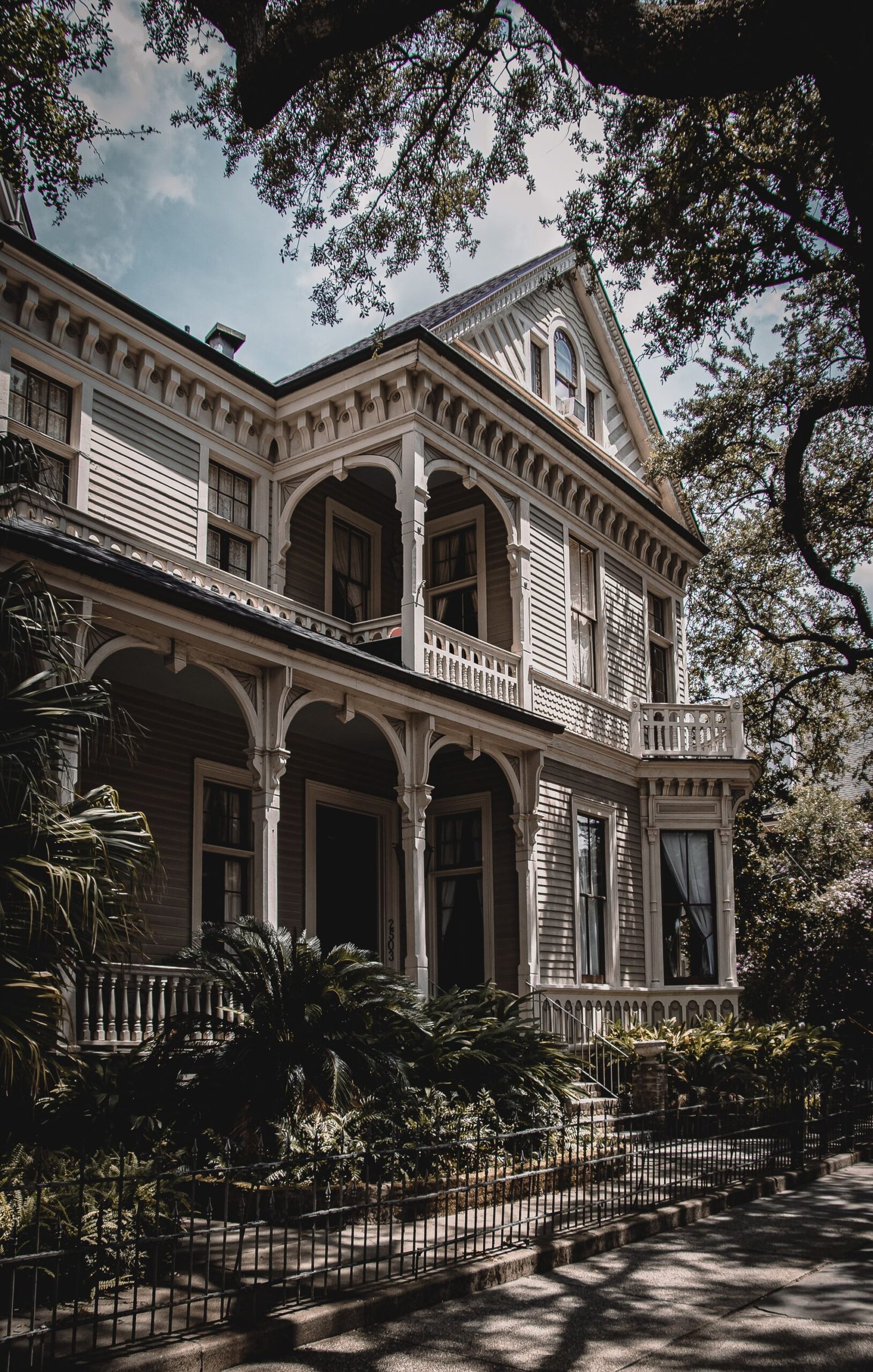
The Buckner Mansion remains one of the most stunning examples of Greek Revival architecture in New Orleans, a style that was immensely popular in the American South during the 19th century . Its design is dominated by a grand two-story portico featuring 48 monumental fluted columns . The architect employed a classical progression of column styles, with Ionic columns supporting the lower level and Corinthian columns gracing the upper level, creating a sense of ascending majesty that captivates the eye . The columns are not just for show; they support wide, wrap-around verandas on three sides of the house, which were designed for socializing and enjoying the breezes of the warm Southern climate .

The exterior’s grandeur is matched by an interior of staggering opulence and scale. Upon entering through the carved mahogany front door, visitors are greeted by a grand center hall that leads to a spectacular triple parlor . These three grand rooms, separated only by columns supporting wide arches, create a magnificent entertaining space that is considered the “masterpiece” of the mansion . Each parlor is adorned with a two-tiered bronze dore chandelier in the Rococo Revival style, a testament to the wealth and taste of the Buckner family . The interior boasts 16-foot ceilings, floor-to-ceiling windows that flood the rooms with light, intricate ornamental plasterwork, and marble fireplaces, all showcasing the highest level of craftsmanship of the era . The mansion also features an observatory, 35 rooms in total, and a separate brick outbuilding that would later serve as classrooms for the Soulé Business College . Every architectural detail, from the intricately designed cast-iron fence with its rare honeysuckle pattern that surrounds the .44-acre lot to the grand staircase inside, was designed to project an image of power and refinement .

From Family Estate to Soulé Business College

The Buckner family lived in the mansion for over six decades, through the turmoil of the Civil War and the subsequent Reconstruction era . As Henry and Catherine Buckner aged, the house remained a central part of their lives and those of their children. After Henry’s death, their daughter Laura and her husband, Cartwright Eustis, continued to live in the home, raising their own family within its walls . However, after more than 60 years of Buckner occupation, the family sold the property around 1920, marking the end of an era for the grand estate .

The mansion’s next life began in 1923 when it was purchased by Albert and Edward Soulé, founders of the esteemed Soulé Business College . The school, which had been established the same year Buckner began construction on the mansion, was one of the oldest and most well-regarded business schools in the South . The Soulé brothers adapted the mansion for its new role, adding a brick classroom building to the rear of the property to accommodate their growing student body . The business school, which operated out of the Buckner Mansion for 60 years, educated numerous prominent alumni, including New Orleans Mayor Robert Maestri and Biloxi Mayor Jeremiah Joseph O’Keefe . George Soulé, the school’s founder, even moved a mosaic tile inscription from the school’s previous location to the front gate of the mansion, which reads: “From education as the leading cause, the public character its color draws” . This transition from private family estate to bustling academic institution gave the mansion another layer of rich history before it closed its doors in 1983, paving the way for its return to private ownership .

A Hollywood Calling: The American Horror Story Connection

After decades of serving as a school, the Buckner Mansion sat dormant for several years before being purchased by new owners, Sandra and Norman King, in 1990, who began a series of major restorations . In 1997, Susan and Charles Zambito took over, continuing the work of restoring the mansion to its former glory . This painstaking restoration would eventually set the stage for the mansion’s most recent claim to fame: its appearance in the American cultural zeitgeist .

In 2013, the world of pop culture came calling when the FX Network rented the Buckner Mansion for the production of “American Horror Story: Coven,” the third season of the hit anthology series . The show’s creator, Ryan Murphy, was captivated by the mansion’s imposing and stately façade, which proved to be the perfect exterior for the show’s setting, Miss Robichaux’s Academy for Exceptional Young Ladies, a boarding school for young witches . While the interiors were filmed on a soundstage, the instantly recognizable, white-columned exterior and iconic cast-iron gate became a central image of the season, and would later be featured in the show’s eighth season, “Apocalypse” . The show’s massive popularity catapulted the already historic mansion into a new level of fame, drawing hordes of tourists and “AHS” fans from around the globe to its gates to snap photos and pay homage to their favorite fictional witches . The mansion, already steeped in history and legend, became a true landmark of the city, admired by architectural enthusiasts, history buffs, and pop culture fans alike.

The Ghosts of Buckner Mansion: The Legend of Miss Josephine

While the Buckner Mansion’s architecture and Hollywood fame are significant draws, it is perhaps its reputation as a haunted house that most deeply captivates the public’s imagination. The mansion is widely considered one of New Orleans’ most haunted landmarks, and at the heart of its ghostly lore is the tragic and persistent figure of Miss Josephine . According to legend, Miss Josephine was an enslaved African American woman who served the Buckner family as a midwife and governess . After the Civil War, she was offered her freedom, but chose to remain with the family, continuing her duties out of loyalty and devotion . It is said that upon her death, her spirit was so connected to the mansion and the family she served that she refused to leave, opting to remain and watch over the property for eternity .

Over the decades, countless visitors, students, and caretakers have reported eerie encounters with the phantom of Miss Josephine . The most common accounts include the sound of a broom sweeping across the floors, even when no one else is present, which has led some to believe she continues to tidy the home she once cared for . Another recurring phenomenon is the faint, inexplicable scent of lemon peel—a fragrance that Miss Josephine was said to favor during her lifetime . She has also been reportedly seen as a ghostly figure on the mansion’s grand staircase, appearing to look over the home she never left . The paranormal activity is not limited to Miss Josephine, however. Guests have also reported a variety of poltergeist-like events, such as lights flickering on and off without cause, doors opening and closing by themselves, and the heavy brass chandeliers swinging for extended periods with no wind or tremors to explain the movement . While many of these are unverified, they have cemented the Buckner Mansion’s status as a premier destination for ghost tours and paranormal enthusiasts .

A Controversial Legacy: Slavery and the Burden of History

It is impossible to discuss the Buckner Mansion without confronting the darker and more troubling aspects of its history. The mansion’s construction and the immense wealth that financed it were built on a foundation of human suffering. Henry Sullivan Buckner amassed his fortune through the labor of enslaved people on his cotton plantations, and the household itself was operated with the help of enslaved servants . The Garden District itself was once plantation land, and the opulence of the mansions that line its streets stands in stark contrast to the brutal reality of the slavery that made their construction possible .

The haunting of Miss Josephine is itself a story rooted in this history. While her legend is often romanticized in ghost tours, it is a reminder that her presence in the house, both in life and in death, was a result of the system of slavery. The stories of her devotion and loyalty, in many ways, reflect the complex and deeply problematic power dynamics of the time . The Buckner Mansion thus serves as a powerful and uncomfortable symbol of the antebellum South. Its stunning architectural beauty cannot fully obscure the fact that it was built on the backs of the enslaved. Acknowledging this painful legacy is crucial to understanding the full scope of the mansion’s history and the deep-seated stories of sorrow that are intertwined with its grandeur . Today, it stands not only as a masterpiece of design but also as a monument to a complex and troubled past, reminding visitors that history is never just about grand columns and beautiful architecture, but also about the people, both free and enslaved, whose lives were lived within its walls .

Buckner Mansion Today: A Private Landmark

Today, the Buckner Mansion remains a privately owned residence, continuing its legacy as one of the most significant and well-preserved examples of antebellum architecture in the United States . Over the years, the property has undergone extensive restoration, particularly under the ownership of the Zambito family who, since 1997, have installed new plumbing, electrical systems, and updated the kitchen and baths while preserving the mansion’s historical character . While it is not open for public tours, the mansion has hosted private events and has even been available as a vacation rental for an exclusive few, with rates reaching as high as $20,000 per week or $4,700 a night . Its appearance in “American Horror Story” and its reputation for being haunted continue to make it a top stop for tourists exploring the Garden District’s historic homes . The mansion remains a living piece of history, adapting to the modern era while holding onto the secrets of the past.

Conclusion

The Buckner Mansion is a multifaceted jewel in New Orleans’ crown, a place where history, architecture, pop culture, and legend converge. From its origins as a symbol of ambition and rivalry in the competitive cotton trade to its years as a respected institution of learning and its current life as a private residence, the mansion has worn many faces. It is a masterpiece of Greek Revival design, boasting 48 majestic columns and a lavish interior that speaks to the opulence of the 19th-century South. Its role as the exterior of Miss Robichaux’s Academy in “American Horror Story: Coven” has solidified its place in modern pop culture, making it a pilgrimage site for fans. Yet, it is the spirit of Miss Josephine and the tales of ghostly phenomena that continue to shroud the mansion in an aura of mystery. However, the most profound layer of its history lies in its connection to slavery, a legacy that serves as a sobering reminder of the human cost behind such grandeur. As it stands behind its iconic iron gates on Jackson Avenue, the Buckner Mansion remains an enduring symbol of New Orleans’ complex past, a beautiful and haunting landmark that continues to fascinate all who come to admire its storied walls.

Frequently Asked Questions (FAQ)

Is the Buckner Mansion open to the public for tours?
No, the Buckner Mansion is a private residence and is not open for interior tours to the general public. However, visitors are welcome to admire its grand exterior, cast-iron gate, and grounds from the sidewalk on Jackson Avenue. It is a very popular spot for photographs and is often included in Garden District walking tours and ghost tours that pass by its gates .

Why is the Buckner Mansion famous?
The Buckner Mansion is famous for several reasons. It is a stunning example of Greek Revival architecture and is one of the most historic and photographed homes in the Garden District. It is also famous for its appearance as the exterior of Miss Robichaux’s Academy for Exceptional Young Ladies in the third season of the television series “American Horror Story: Coven” . Additionally, it is known as one of New Orleans’ most prominent haunted houses, with the legend of its resident ghost, Miss Josephine .

Where exactly is the Buckner Mansion located?
The Buckner Mansion is located at 1410 Jackson Avenue in the Garden District of New Orleans, Louisiana. It is situated on the corner of Jackson Avenue and Coliseum Street. The mansion is conveniently located just two blocks from the St. Charles Streetcar Line, with stops at Josephine and First Streets .

Who built the Buckner Mansion and when?
The mansion was built in 1856 for Henry Sullivan Buckner, a wealthy cotton factor . Buckner commissioned the New Orleans architect Lewis E. Reynolds to design the mansion, who was the same architect who designed Stanton Hall for Buckner’s rival, Frederick Stanton, in Natchez, Mississippi .

Is the Buckner Mansion really haunted?
The Buckner Mansion has a long-standing reputation as one of the most haunted locations in New Orleans. The most famous ghost story is of “Miss Josephine,” a formerly enslaved woman who remained with the family after the Civil War and is said to haunt the property. Reports include the scent of lemons, the sound of sweeping, and sightings of a ghostly figure on the stairs . While these stories are unverified, they are a significant part of the mansion’s legend.

How much is the Buckner Mansion worth?
As of the most recent information, the Buckner Mansion has been listed for sale, with an asking price of $4.5 million in 2024 . The 9,062-square-foot home sits on a .44-acre lot and features seven bedrooms and 6.5 bathrooms, along with many of its original architectural details .

Is “American Horror Story” filmed at the real Buckner Mansion?
Yes, the real exterior of the Buckner Mansion is used in the filming of “American Horror Story: Coven” and “Apocalypse” to represent Miss Robichaux’s Academy for Exceptional Young Ladies. However, the interiors of the school were filmed on soundstages .

Continue Reading

Home design

Jernsenger: The Complete Guide to Scandinavian Iron Beds, History, and Modern Appeal

Published

on

jernsenger

Introduction

The world of interior design is constantly evolving, yet some elements possess a timeless quality that transcends fleeting trends. One such element that has captured the attention of homeowners, designers, and history enthusiasts alike is the “Jernsenger.” While the term may initially sound unfamiliar or even like a brand name, its roots run deep in Scandinavian culture and European design history. In its most straightforward translation, Jernsenger is a Scandinavian term that simply means “iron bed,” combining the words “jern” (iron) and “senger” (beds) . However, to reduce this concept to a mere translation is to overlook the rich tapestry of craftsmanship, durability, and aesthetic philosophy it represents. This comprehensive guide will delve into the true meaning of Jernsenger, exploring its linguistic origins, its pivotal role in the history of furniture, and its enduring appeal in the modern home .

Understanding Jernsenger is about more than just choosing a bed frame; it is about embracing a design philosophy that values strength, longevity, and understated elegance. In a contemporary market saturated with disposable furniture made from particleboard and synthetic materials, the Jernsenger stands as a testament to a time when pieces were built to last for generations . This article will serve as your definitive resource, covering everything from the historical significance of iron beds to the practical benefits they offer today. We will explore why these beds, born from a need for hygiene and durability, have become a symbol of sophisticated style and sustainable living, and how they can seamlessly integrate into a variety of interior design schemes, from rustic farmhouse to sleek urban minimalism .

The Linguistic and Cultural Origins of Jernsenger

To truly appreciate the concept of the Jernsenger, one must first understand its linguistic heritage. The word is a compound noun derived from Scandinavian languages, primarily Norwegian and Danish. In these languages, “jern” translates directly to “iron,” while “senger” is the plural form of “seng,” meaning “bed.” Therefore, the literal translation is “iron beds” . While this direct translation is simple, the cultural weight it carries is substantial. In Scandinavian design traditions, furniture is not created with disposability in mind; it is built with a focus on durability, practicality, and minimalist beauty .

The term itself implies a standard of quality that is deeply connected to Nordic manufacturing heritage. In Norway, for instance, the word is historically linked to the Christiania Jernseng- og Jernvarefabrik, a foundational company that industrialized the production of these beds starting in 1848 . Thus, saying “Jernsenger” is often understood to distinguish high-quality, often antique or artisan-crafted metal beds from generic, mass-produced frames. It evokes a specific standard of quality and a connection to a bygone era of skilled metalwork . This cultural context transforms the word from a simple description of an object into a declaration of values: a commitment to craftsmanship, a respect for history, and an appreciation for design that serves both form and function .

A Historical Perspective: From Hygiene to Artistry

The history of the Jernsenger is a fascinating journey that begins not just in the pursuit of beauty, but in a quest for health and hygiene. In the 19th century, before the widespread adoption of metal frames, most people slept on wooden beds. While wood was a readily available material, it possessed a significant drawback: it is porous. These tiny cracks and crevices became ideal hiding spots for bed bugs, rodents, and bacteria . When devastating diseases like cholera swept through European cities, medical experts began identifying the traditional wooden “box” bed as a serious health hazard . The shift to iron frames, or Jernsenger, was therefore a revolutionary step in public health. Iron is non-porous, solid, and easy to sanitize with harsh disinfectants, making it a far more hygienic alternative .

Hospitals and military barracks were among the first to adopt these sturdy iron beds, but their appeal quickly spread to domestic homes. By the Victorian era, owning an iron bed was not just a practical choice but a statement about a family’s commitment to modernity and cleanliness . As the Industrial Revolution progressed, ironworking techniques became more refined, allowing craftsmen to move beyond purely functional designs. The beds began to evolve into decorative pieces, with artisans adding artistic touches, intricate scrollwork, and elegant detailing while maintaining their practical strength . This era marked the transformation of the Jernsenger from a simple piece of medical or military equipment into a beloved fixture in the home, symbolizing both stability and social status .

The Enduring Appeal: Strength, Durability, and Sustainability

One of the most compelling reasons for the resurgence of the Jernsenger in modern interior design is its exceptional durability and sustainability. Unlike many modern beds constructed from MDF, particleboard, or low-quality wood held together by glues, a well-made iron bed is built to last. These beds are incredibly resilient, capable of supporting significant weight without bending, warping, or weakening over time . While wooden frames can crack, warp due to humidity, or become infested with pests like termites, a Jernsenger maintains its structural integrity for decades, often for generations . This longevity makes it a sound investment, contrasting sharply with the disposable nature of much contemporary furniture .

Furthermore, choosing a Jernsenger is a decision that aligns with a more sustainable and eco-conscious lifestyle. The long lifespan of an iron bed means less furniture waste ending up in landfills. When an iron bed finally reaches the end of its useful life, it is completely recyclable. Iron is one of the most recycled materials on the planet, and it can be melted down and repurposed without any loss of quality . This inherent sustainability makes the Jernsenger an environmentally responsible choice for the modern consumer who values both quality and the health of the planet. It represents a shift away from the “fast furniture” model and toward a more thoughtful, enduring approach to home design .

Design Versatility for the Modern Home

The Jernsenger’s ability to adapt to a wide range of interior design styles is a key factor in its enduring popularity. Today, modern iron beds are available in a stunning variety of styles, ensuring there is a perfect match for every taste and aesthetic .

For those who appreciate classic elegance and romance, there are Victorian-inspired Jernsenger. These beds are characterized by their intricate scrollwork, curved lines, and ornamental details. They often feature elaborate headboards and footboards that serve as a striking focal point, adding a sense of history and nostalgia to the bedroom . Despite their detailed appearance, the thin metal rods give them a “weightless” quality, making a large bed feel airy rather than bulky .

On the other end of the spectrum are the Modern Minimal and Industrial styles. These designs embrace simplicity and clean lines, moving away from ornamentation in favor of raw aesthetics. They often feature sleek, streamlined frames in neutral finishes like black, white, or matte grey, making them perfect for contemporary homes . Their versatility allows them to fit seamlessly into loft-style apartments, urban chic homes, and even Scandinavian-inspired interiors that champion minimalism . Whether your taste leans toward the ornate or the understated, the diversity of Jernsenger designs ensures that this historic piece of furniture can serve as a beautiful and functional centerpiece for any modern bedroom .

Practical Benefits and Maintenance

Beyond their aesthetic appeal, Jernsenger beds offer a host of practical advantages that enhance the quality of life in the bedroom. One of the most significant benefits is hygiene. Because iron beds are constructed with open frames, they provide superior airflow to the mattress . This prevents the growth of mold, mildew, and dust mites, which are often a problem with solid divan bases or box springs. The non-porous nature of the metal also means there are no hiding places for allergens or pests, making it an excellent choice for allergy sufferers and those seeking a cleaner sleep environment .

Maintaining a Jernsenger is also remarkably straightforward. Routine cleaning with a soft, damp cloth is typically enough to keep it looking new. Most modern iron beds come with protective powder-coated finishes that prevent rust and corrosion, making them resistant to the challenges of various climates . If a scratch or minor wear does occur, it can often be repaired with simple touch-up treatments, preserving the bed’s appearance for years to come. Compared to upholstered beds that require deep cleaning or wooden beds that need regular polishing, the Jernsenger demands minimal upkeep . Furthermore, common concerns about iron beds being noisy are often unfounded; any squeaking is usually a sign of loose bolts, which can be quickly and easily remedied by tightening the hardware or adding a rubber washer .

Conclusion

The Jernsenger is far more than a simple term for a bed frame; it is a concept that embodies a rich heritage of craftsmanship, a revolution in hygiene, and a timeless design philosophy . From its Scandinavian linguistic roots to its pivotal role in the public health reforms of the 19th century, the iron bed has proven its value through centuries of use . Today, its appeal is as strong as ever, perfectly aligning with modern values of sustainability, durability, and functional elegance .

Choosing a Jernsenger for your home is a decision to invest in a piece of furniture that will not only enhance the aesthetic of your bedroom but will also stand the test of time, offering unrivaled strength, low maintenance, and a clean, healthy sleeping environment . Whether you are drawn to the romantic flourishes of a Victorian design or the sleek lines of a modern industrial frame, the Jernsenger offers a versatility that few other furniture pieces can match . In a world of fast fashion and disposable goods, the Jernsenger stands as a proud testament to the beauty and value of lasting quality. It is a piece of history, a work of art, and a practical foundation for rest, all in one .

Frequently Asked Questions (FAQ)

What does Jernsenger mean?

Jernsenger is a Scandinavian term that translates directly to “iron beds.” The word is a combination of “jern,” meaning iron, and “senger,” meaning beds. While the meaning is literal, it also signifies a strong tradition of craftsmanship and durable, timeless design .

Are Jernsenger iron beds durable?

Yes, Jernsenger iron beds are exceptionally durable. Made from strong materials like wrought iron, cast iron, or steel, they are designed to withstand significant weight and last for decades without warping, cracking, or losing their structural integrity. Unlike wooden beds, they are also resistant to pests and many forms of damage .

What are the benefits of a Jernsenger compared to a wooden bed?

Jernsenger beds offer several advantages. They are more durable and resistant to pests like termites, require much less maintenance, and are easier to clean. They are also inherently more hygienic, as their non-porous metal surfaces don’t harbor allergens, and their open frames provide better airflow to the mattress, preventing mold and mildew .

Are iron beds comfortable and quiet to sleep on?

Yes, iron beds are very comfortable as they provide excellent, even support for a mattress, reducing the risk of sagging. As for noise, a well-assembled Jernsenger is quiet. Any squeaking is typically caused by loose hardware and can be easily fixed by tightening the bolts, with the option of adding a rubber washer to eliminate metal-on-metal friction .

Can a Jernsenger fit into a modern home’s design?

Absolutely. Modern Jernsenger beds are available in a wide variety of designs that fit seamlessly into contemporary homes. Styles range from minimalist and industrial designs with clean, simple lines to more ornate, vintage-inspired looks, ensuring there is a perfect option for nearly any interior design aesthetic .

Continue Reading

Trending